
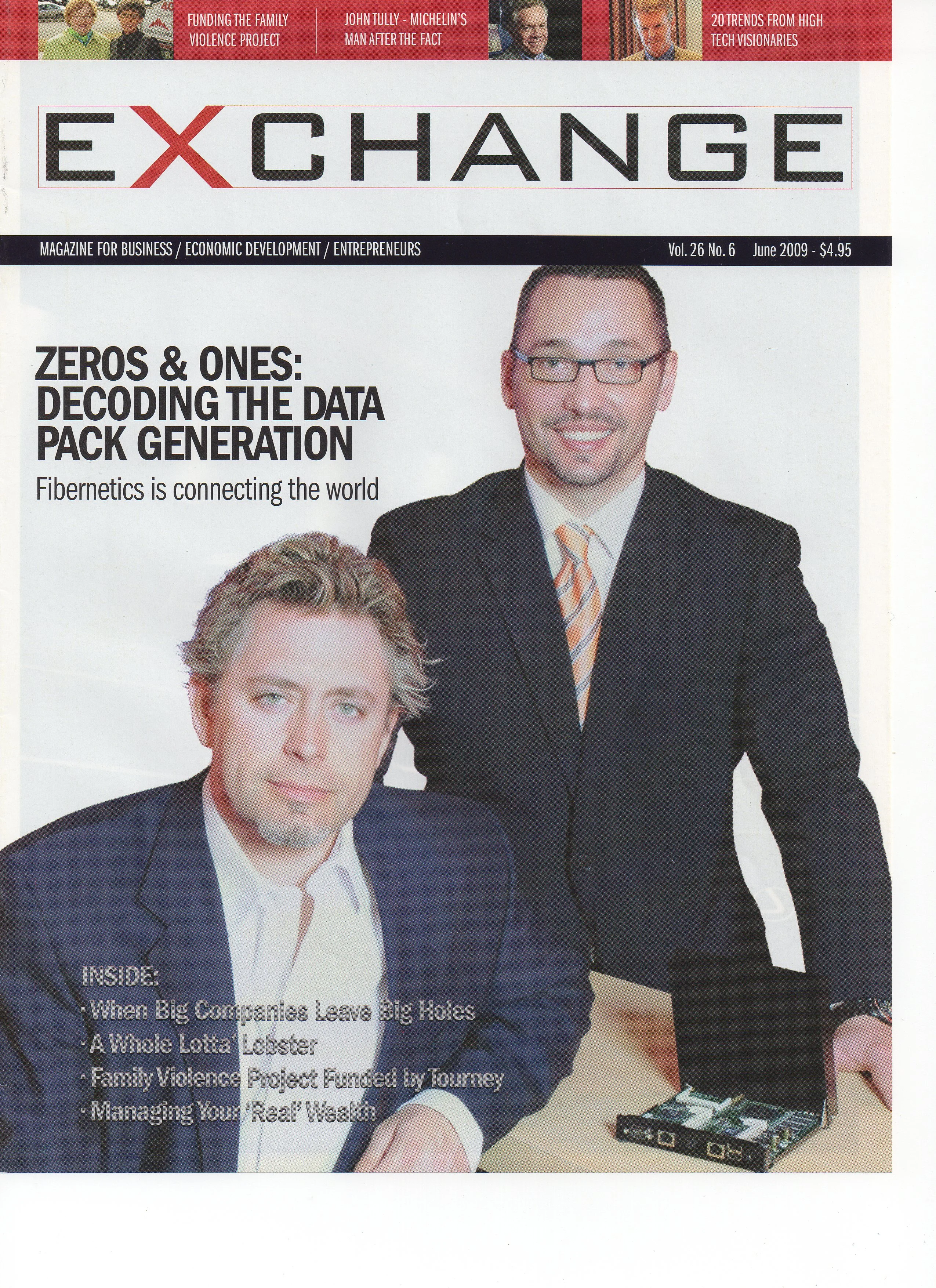
 Fifteen years ago, Bell Canada was in the final stages of deregulation. That mighty monopoly, founded in 1880, would, on its 100th anniversary, start a deregulation program that, when completed in 1997, would leave it a fraction of what it once was. During the later years of the program, entrepreneurs scrambled to find their place.
This is a story about two friends turned entrepreneurs.
Deregulation triggered an unprecedented interest in telecommunication. Opportunity was the driver: if you could digitize it, transmit it and decode it, you could make a lot of money. This was three years before the launch of the Blackberry, the very beginning of a cellular revolution. It was a time when digital technologies were leapfrogging analog competitors. The computer was establishing itself in consumer markets. It was a time for innovative ideas. “Back then we were scared,” says Jody Schnarr, CEO of Fibernetics. He and long time friend/business partner John Stix, who is Marketing Director of their Kitchener-Waterloo based Competitive Local Exchange Carrier (CLEC), were worried about the challenges of self employment, about risks involved in creating a working business model that would generate income for the two. It was a “healthy scare,” because it raised concern and generated a willingness to learn from the daily rigors of sales and marketing.
Their learned approach helped them design a communication empire that today goes head to head against Rogers, Bell and Telus.
While working for separate companies, the friends started to dabble in the long distance calling business. Schnarr, who is a gifted technological tinkerer, said they “found out you can buy and sell long distance service,” which in 1994, was very new. Trying to access grant money, the two developed a long distance business strategy. The process included identifying the potential market, so “we went and knocked on doors to find who would take the service,” says Schnarr.
They hypothesized people in Stratford wanted to call people in Kitchener-Waterloo “because there was a very close tie.” “We knocked on about 700 doors and most said they wanted it,” so Schnarr and Stix were empowered with a list of 700 people apparently willing to pay $10 a month to call the Waterloo area. They found a supplier to provide technology that Schnarr could use to connect the two locales together. The cost was about $15,000. “We put the service in, got it running” … and “none of them took it.”
They spent two months “calling, begging.” In the end, they signed up 70 customers. “We had $10 a month from 70 customers – $700 a month. There was a flat cost of $1000 a month.” They had developed a formula to go broke. Scrambling to leverage what they built, they developed an idea: instead of selling a long distance service to the households, people could listen to an advertisement prior to connecting and receive a free long distance call. In 1994, long distance cost about 40 cents a minute. Their research said, while Stratford residents wanted to buy the $10 service, they didn’t want to sign up with a new company. “Everyone wants to use it, but they didn’t want to change. All we had to do was come up with a way that everybody would use it,” explains Schnarr.
That adaptation turned a quickly failing business into a fledgling communications/ advertising company. “We thought about getting someone to pay the $1000 monthly bill, to let everybody use it for free.” The advertiser would get a new forum to communicate their message, and the public, after hearing the advertisement, will be able to make a free long distance call. Car dealer Gary Stockie bought the concept. They changed the phone number to 662-GARY, and launched their first PR campaign. Next-day coverage in the local newspaper prompted 4000 households to use it that first day. “The town just went nuts. At the end of it, we had 8000 household using it a day,” says Stix. “We started, we were bankrupt in two months, then we were back up in three months,” says Schnarr. The future was brighter.
“Out of necessity, we came up with the idea that everybody in the Stratford area wanted.” Further, what they created was scalable. “The service was up, working and there was nothing for us to do,” says Stix, “So we just started going to every single tiedin area. We brought Guelph into Kitchener/ Waterloo, and looked at Greater Toronto. We basically did 40 to 50 sites. We were channeling a tremendous amount of calls per day at the time.”
They looked at revenue streams, creating a “wheel” where 20-25 ads would go into a rotation. “We went on building those out, and once we had them all covered we sat back and wondered, ‘what can we do next?’” says Schnarr. By 1996 Schnarr and Stix were fully entrenched within the telecommunications industry. They were hearing rumblings about “voice over internet protocol” (VOIP). The vision was great, but the equipment wasn’t available. So Schnarr started to fabricate their own equipment to convert analog into digital and transmit between two cities. They made it work, but found that the integrity of the internet lines were “pretty awful”.
Over the next few years they continued to play with evolving technology. “It was the only way we could bridge two sites together, without having to pay a tremendous amount of money for long distances.” Standards had not been set in the internet world and there were too many variables, so they created their own network and started to tie together communities in southern Ontario. “We tied in London, Kitchener, Toronto , Ottawa, Hamilton and a couple of others in a giant, VOIP mesh, and we launched the Labatt Blue line.” The Labatt Blue line was a promotion network where a person would call the number 664-BLUE and then in turn call select major cities. “We built that company up and called it Onlinetel Corp.” They sold it in 2001, to a company operating out of Toronto, for an undisclosed amount.
The building of that network taught Schnarr and Stix some core principles about their industry, most importantly, that networks must be sustainable. The Labatt Blue Line was supposed to last two months, but it functioned for 14 months, generating 300,000 calls a day and the interest of a buyer. In the end Labatt executives didn’t want to write that big of a cheque – “so it ended,” says Stix.
When Onlinetel was sold in 2001, the two took a break. But after two years of golf and sunshine – the fulfillment of their non-compete clause – they started another company, Worldline, a residential service offering long distance service for $3.95 a month. “It’s basically very low cost, with almost zero margin.” The goal was to go big. “I always wanted to get into telecommunications in a deeper level. I had a goal to be a CLEC, a Competitive Local Exchange Carrier – basically, you could put your own fiber in the ground, you connect to Bell and you have your own phone lines. We know we were fantastic customers for Bell, we had given them $15-$20 million for phone lines in our time, we know what the perfect customer is like,” said Schnarr.
The long distance service was just the new beginning. “We started our dial-up internet service called 295.ca. The internet is a perfect customer for a CLEC.” When the separate companies combined users , they have tremendous volume. “We built up $2.95 and Worldline into a good revenue base, and used that revenue and buying power to build our CLEC. We called it Fibernetics, then we simply switched from other carriers to our CLEC – Fibernetics.” In essence they bought lines from themselves. “Those two customers [Worldline& 295.ca] didn’t make a great deal of money on the market, but they spent a great deal of money on the carriers, so now they spend a great deal of money with Fibernetics. We have two great customers, it’s laterally integrated. We control every piece of the puzzle,” says Schnarr.
In July 2007, through their Worldline operation, Schnarr and Stix bought back Onlinetel, the former Labatt Blue Line company for what is described in a Newlook Industry press release as a “$2,250,000 aggregate consideration”. “We’re approaching 100,000 Worldline customers paying flat fees like $3.95 for all of Canada … You can call anywhere in the United States, and 50 international countries for $13.95 a month, nobody has every offered that before, and that is unlimited,” says Stix.
Infrastructure is one thing, marketing the structure once built is a different process altogether. But the two learn quickly. Expanding the model designed with the Labatt Blue Line campaign, Stix developed a unique affiliate program that works with media outlets and associations throughout Canada. “We had an idea of going to the Toronto Sun, and said you can provide value added services to your readers and in turn you can also share in the revenue. So [the Sun] put up the media dollars to help promote the service.
“Fibernetics is the phone company, all the services ride on this network, there are thoughts that this would become the number one brand,” says Stix. Fibernetics is a new service, but Stix says, the product is not new: “our first press release said that we have a new business gateway that makes business calls over the internet – that was in 2002.”
The whole industry had some difficult times trying to make VOIP work. “We feel it ‘s taken us the last three years to get it just right,” says Schnarr. “We created a new approach to a phone system that uses our network with the concepts of digital voice. The advantages of having our own network, and coming up with a model where someone can buy one of our phone systems, and cancel all their phone lines so they don’t have to pay us for their phone lines, is new.”
Throughout 2008, Fibernetics beta-tested both residential and commercial applications in Waterloo Region. Economical Insurance was a beta site and liked it so much they held an event to encourage 2500 broker offices to take advantage of the offer. As a subscriber with Worldline for over a year, they’ve developed their own service called Economic Call, “which is our residential service, they promote it, customers call us, and we sign them up.”
Fibernetics officially launched on January 5, 2008, as they placed the phone system and internet service in 70 beta sites. Currently, they’re installing 4-5 units a day. Interested readers can call 1-877-406-1333 for more info about the service.
To highlight the flexibility of their phone system, “We’ve put a couple in trucks,” says Stix. The cost of the phone system is $1295 and includes a PBX box and phone units. The system is feature rich, says Stix. “It’s a fantastic product on its own even if you have to pay for your phone lines …. We’re going to marry it all together into one solution.”
“Phone lines are going to go away over time. We know that’s going to happen, so that’s what we’re going to do, what we want to be is a internet provider. This whole exercise is to get all the internet customers out there by helping them get off their phone lines and getting them a proper, phone system that has the features and technology built into it. Instead of waiting for it to just happen, we’re striking first.” The company is hiring aggressively. They already have a fairly substantial team, and are looking to expand their operations locally and across North America. Fibernetics is a international CLEC, with offices in Montreal, Dominican Republic and Bulgaria. Gary Handleman, Senior PBX Engineer, is in Montreal. “He’s been working on our phone system since 2004, when we expanded to Dominican Republic, and in Bulgaria,” says Schnarr. “He’s been working on our own system and at the same time putting together the feature sets, one by one to get to our final product.”
“Although we’ve been in business for a while, we feel like we’re just launching. Really this is the dream,” says Stix, “where we feel like we’ve accomplished what we wanted to be. It took a long time, there was so much build up, paying for the network, raising a pile of capital, developing our own residential business line, crossing that over to our own network – it’s a dream,”he repeats. “We’re going to go from $10 million, through the roof,” says Stix. “We’re channeling $5 million worth of minutes of long distance a day on this network.”
“We’re born and raised in Waterloo, we all live here, we have our families here, we don’t plan on going anywhere,” adds Stix. For the time being, the two will focus on expanding their networks. “We have applications for CLEC in New York City, and we’re looking at a number of sites internationally to build our international CLEC service.” Schnarr says, “the end goal is to be a very large internet provider, because that‘s what people will be buying, with applications on top of it.”
Stix adds, “I don‘t know where the end is but I do know, when the majority of people in Canada, in the same breath, can say, ‘Telus, Bell, and Fibernetics’, I will know that we have accomplished our goals.”
 Published May 2009 By CO Staff
 They ran a pilot program in Kitchener, Waterloo and Cambridge this year with 40 companies and the response was big. “From small companies to a very large developer it worked beautifully,” says Stix. “The buzz is just amazing.”
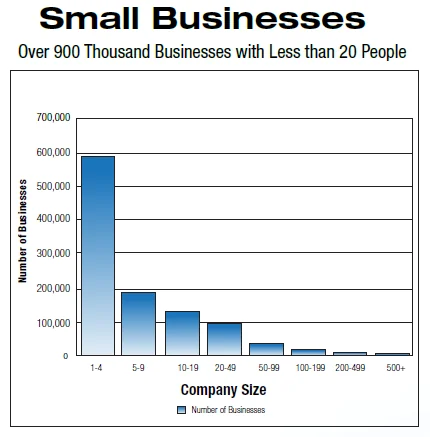 The small PBX device resides on a business’s network and offers a full range of PBX functionality.
 By SAMARA CYGMAN
 “We felt you simply can’t change the way people have been calling for 100 years,” says Stix. “We didn’t want to teach people to dial differently so we decided to work on technology to access our service through your everyday home phone.”