Cable TV Providers are Weird (and not in a good way)

BGR, a U.S. based technology news blog, published a story  that is just so odd, it has to be seen to be believed. It turns out there is something in the States called the National Cable and Telecommunications Association and they attempted to launch a quirky anti-cable cutting campaign intended to go viral. Instead, what they got was, well, something else…

Behold: Cable companies release the worst anti-cord cutting campaign of all time

cable-hole-3

By 

Are you a cable TV subscriber who might be considering cutting the cord? Did you already take the leap and dump your TV service? Cable TV doesn’t want to see you go, and it wants you back if you’ve already left. And what better way to convey that message than with a nice little campaign put together by the National Cable and Telecommunications Association, the main trade association for cable operators in the U.S.

Behold: The Hole Saga.

Launched earlier this month, The Hole Saga campaign apparently hopes to stop subscribers from cutting the cord by… well… I have no idea how it hopes to stop subscribers from cutting the cord.

Ads currently running on various websites carry the tag line ”Life without cable leaves a mighty big hole.” Clicking through takes you to The Hole Saga website, where you can watch four short marketing films brought to you by the NCTA.

The short films are intentionally ridiculous of course, but their intentional ridiculousness is so ridiculous that it’s almost unbearable. Like a train wreck, though, it’s almost impossible to look away.

The premise of each short is as follows: a person finds him or herself in a precarious or otherwise undesirable situation. Just as things are about to go bad, the video stops and the viewer is asked to do one of two things: “Give ‘em cable” or “Cut ‘em loose.”

Choose to give the protagonist cable and a tablet, presumably connected to a high-speed wireless network provided by a cable carrier, somehow appears. The information gleaned from whatever website or video happens to be displayed on the tablet inevitably saves the day.

Choose instead to “cut ‘em loose,” and disaster strikes.

An example:

In the first video, a man with a gaping hole in his chest (get it?) is bicycling on a road through the desert when he happens upon a little bunny he believes to be in need of his help. He gets off of his bicycle and approaches the seemingly cute and friendly rabbit. Upon closer inspection, we see that the rabbit actually has glowing red eyes and sharp, jagged teeth. The man doesn’t seem to care.

Then, the all too important question is asked: “Give ‘em cable” or “Cut ‘em loose?”

cable-hole-4

The cable cutter continues to embrace the bunny, and offers the small creature a ride on his bicycle. The rabbit then leaps up and latches on to the man’s neck, biting down and continuing to hold on despite the man’s struggles.

“And because he didn’t get the news,” a tablet tethered to a cactus reveals, “he didn’t know mutant bunnies were on the loose.”

Of course had you given the poor guy cable, disaster would have been averted. The tablet tethered to the cactus would have been revealed in time and it would have been streaming a breaking newscast informing the man that mutant bunnies escaped from a nearby lab. He would know, then, to put on a falconry glove and tame the mutant beast before taking it for a ride on his bike.

And that gaping hole in his chest… would have been filled.

(Ugh.)

To close out the video, the tag line appears: ”This has been a cable connection.”

Three more interactive videos on the site offer similar story lines and the viewer is then invited to share the whole experience on Twitter or Facebook. Despite searching, I couldn’t find very many links posted by people who wanted to share The Hole Saga website on Twitter or Facebook.

Canada: It really is our home and native land

ccmK26O

Canadians are more attached to their country than the people of any other advanced democracy on Earth: survey

Michael Valpy of the Toronto Star – Canadians are more attached to their country than the people of any other advanced democracy on Earth, says Ottawa’s EKOS Research Associates, which for decades has gauged the glue that holds the nation together.

We beat out the Americans, who rank second, and are strides ahead of the Mexicans, according to a North America-wide survey compiled by EKOS last month. We’re hooked on the place we call home and so, very quickly, are new arrivals. First comes belonging to family and then comes Canada. Indeed, research by EKOS, which has worked side by side with a year-long Atkinson Foundation project examining the state of social cohesion in Canada, finds that foreign-born Canadians have a marginally stronger attachment to the country than do native born — 77 per cent versus 75 per cent.

In any event, the bond has been high across all demographic cohorts for at least the past 15 years except for a modest decline among the young, says EKOS president Frank Graves.

In a testament to how well our multiculturalism still works, EKOS finds no differences in values held by native-born and foreign-born Canadians.

Indeed, it finds that the percentage of Canadians attached to ethnic identities is dropping dramatically — down 20 percentage points over the past 20 years despite rising barriers to integration posed by a diminishing supply of good jobs and the fact that virtually all newcomers belong to so-called visible minorities.

In fact, if Quebecers’ and aboriginals’ lukewarm feelings toward Canada are factored out — less than 40 per cent of Quebecers report a strong attachment to the country — Graves says Canadians’ bond to their land would very likely lead the world.

But… and you know there had to be one…

What EKOS and the research project sponsored by the Atkinson Charitable Foundation , in partnership with the Honderich family and the Toronto Star, conclude is that the bonds that hold Canadians together are unraveling, leaving a nation profoundly polarized along fault-lines of age, education and the workplace.

Young, highly educated and progressive “next Canada” is disconnecting itself from formal participation in Canada’s democracy. The percentage that voted in the 2011 federal election was under 40 per cent and Graves predicts it may well slip into the teens by the next election or two.

“Next Canada” sees a nation shaped by public institutions, chiefly governments, that favour aging Boomers who vote en masse and heavily en bloc for Stephen Harper’s Conservatives.

“The net result is a gerontocracy that reflects the exaggerated and imagined fears of older Canada precisely at a time when the country urgently needs the more optimistic and innovative outlooks of the relatively scarcer younger portion of our society,” says Graves.

And the arrival of Harper’s Conservative administration, the first national government to govern clearly (or at least rhetorically) from the right, has resulted in a polarized, ideological Canada — not unique to Canada but forcefully present.

Canadians’ trust in their national democracy has reached a historic 50-year low. In 1956, almost 75 per cent of Canadians said they trusted the government to do the right thing all or most of the time. By late last year, only 28 per cent did.

A mere four years ago, 45 per cent thought their democracy was healthy. A year ago — before the clusterduffy struck — only 33 per cent did.

In 2004, 42 per cent of Canadians thought the federal government was moving in the wrong direction. By mid-2013, 56 per cent did.

Despite being governed by an ideological conservative administration on the right, Canadians as a whole are significantly less connected to social conservative values than they were 20 years ago and only 25 per cent share the government’s values.

An EKOS poll for the Atkinson project found that nearly 40 per cent of Canadians would break a federal law with which they don’t agree. And only 15 per cent of younger Canadians, and 25 per cent of older Canadians, say they trust each other.

Polarization — primarily along age and education fault-lines — has taken place around the role and power of the state, around foreign policy, around civil rights versus national security, austerity versus social investment and, most profoundly, around fears of economic insecurity.

Support for the Harper administration draws together those who support small-c conservative values and minimalist government and those who are still optimistic about their economic futures.

Thus both values and economic self-interest along with a lot of grey hair unify the Conservative Party vote — 38 per cent in the 2011 election — in a way that doesn’t unify or motivate those who don’t like their economic futures or who don’t connect with social-conservative values.

This second group comprises the biggest chunk of the population but it is politically shapeless: the young, the university educated and cosmopolitan, most Quebecers, the expanding swaths of the middle class and immigrants who are slipping into economic dejection and workplace precariousness and realizing that the dream of progress, of inevitable social and economic betterment, is likely at an end.

Canada’s middle class is in emotional crisis, sunk in resentment, stagnancy and insecurity, and deeply pessimistic about its economic and social future. The bleak statistics of inequality are replacing social inclusivity as the country’s new norm.

A just-published, exhaustive inquiry into inequality edited by public policy scholars Keith Banting and John Myles reports that transfers and what’s left of Canada’s progressive tax system no longer offsets the growth of inequality generated by the market.Over the past decade and a half, says EKOS, the middle two out of three Canadians who called themselves middle class has dropped to a little more than one out of two. Think of what that means: People are deselecting themselves from the middle class. It is a phenomenon EKOS’s Graves says he’s never before encountered.

Finally, a small survey of Quebecers’ attitudes toward the rest of Canada show the two solitudes are increasingly that: solitudes. Quebecers see their English-speaking co-citizens as dull, conservative, still in the grip of religion and, in the West, as U.S.-style cowboys in the West. Meanwhile, they see themselves as laid-back romantics and visionaries with a better sense of humour.

In large part, Canada’s fragmenting social cohesion is a systemic issue: Like all the advanced democracies, Canada is becoming a more individualistic society. We actually are falling apart, less connected to each other through our communities and families and especially our workplaces. That’s not new although it’s accelerating.

Digital Home Phone

The erosion of basic trust today, says Graves, “is a threat to both social cohesion and even economic performance. Skepticism and wariness are useful up to a point, but it’s hard to make much progress when so many people mistrust so many others so much of the time.”

Still, our attachment to the country remains sturdy except for the two groups the dominant society hasn’t absorbed.

Why?

“National attachment is rooted in pretty primordial values and identify factors, and hence it’s pretty stable stuff,” says Graves. “I also think that this country is very blessed with an abundance of natural assets and societal advantages that make it a pretty attractive place to live.”

Worldline Waives Long Distance Fees to Typhoon Haiyan Families

APTOPIX_Philippines_Typhoon-03ae81384114561

Worldline Waives Long Distance Fees to Typhoon Haiyan Families

Canadian’s Call Free to the Philippines for the Month of November

CAMBRIDGE, ONTARIO–(12/06/13)-  Worldline, a division of Fibernetics Corp,  waived all long distance charges from their customers who called the Philippines in November, looking to get in touch with the survivors of Typhoon Haiyan which devastated that country.

“Our hearts go out to the Filipino community and all those whose family and friends have been impacted by Typhoon Haiyan,” said Worldline Co-Founder and CMO John Stix said. “With so many people out of contact, we felt it was the least we could do to support those who have lost so much and we hope all of our customers managed to contact their families and friends in the Philippines.”

Typhoon Haiyan, known as Typhoon Yolanda in the Philippines, was an exceptionally powerful tropical cyclone that devastated portions of Southeast Asia, particularly the Philippines, in early November killing more than 5,000 and injuring tens of thousands more.

Typhoon Haiyan: How you can help

About Worldline:
Celebrating its 10th anniversary in 2013, Worldline provides affordable home phone, unlimited high speed Internet and long distance services to hard working Canadians. One of the fastest growing telecommunications companies in Canada, Worldline is wholly owned and operated by Fibernetics Corp, a Competitive Local Exchange Carrier (CLEC) servicing over 300,000 Canadians coast-to-coast.  Website: worldline.ca Twitter: @worldlinecanada

About Fibernetics:
Headquartered in Cambridge Ontario, Fibernetics is dedicated to changing the way people communicate by offering telco functionality and pricing that Canadians have never seen before. Fibernetics has its own national infrastructure that delivers a full range of voice and data services for residential customers through Worldline and business clients with their NEWT PBX and ANA solutions. Website: fibernetics.ca Twitter: @fibernetics

###

Media Inquires:
John Stix – CMO
Worldline
519-489-6700
jstix@corp.fibernetics.ca

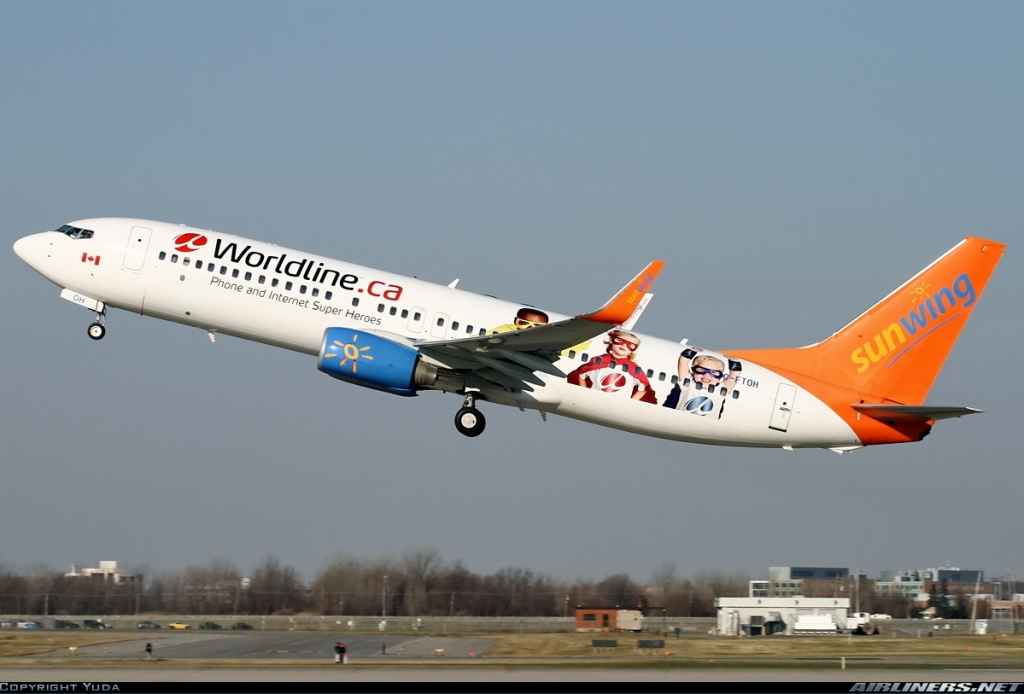
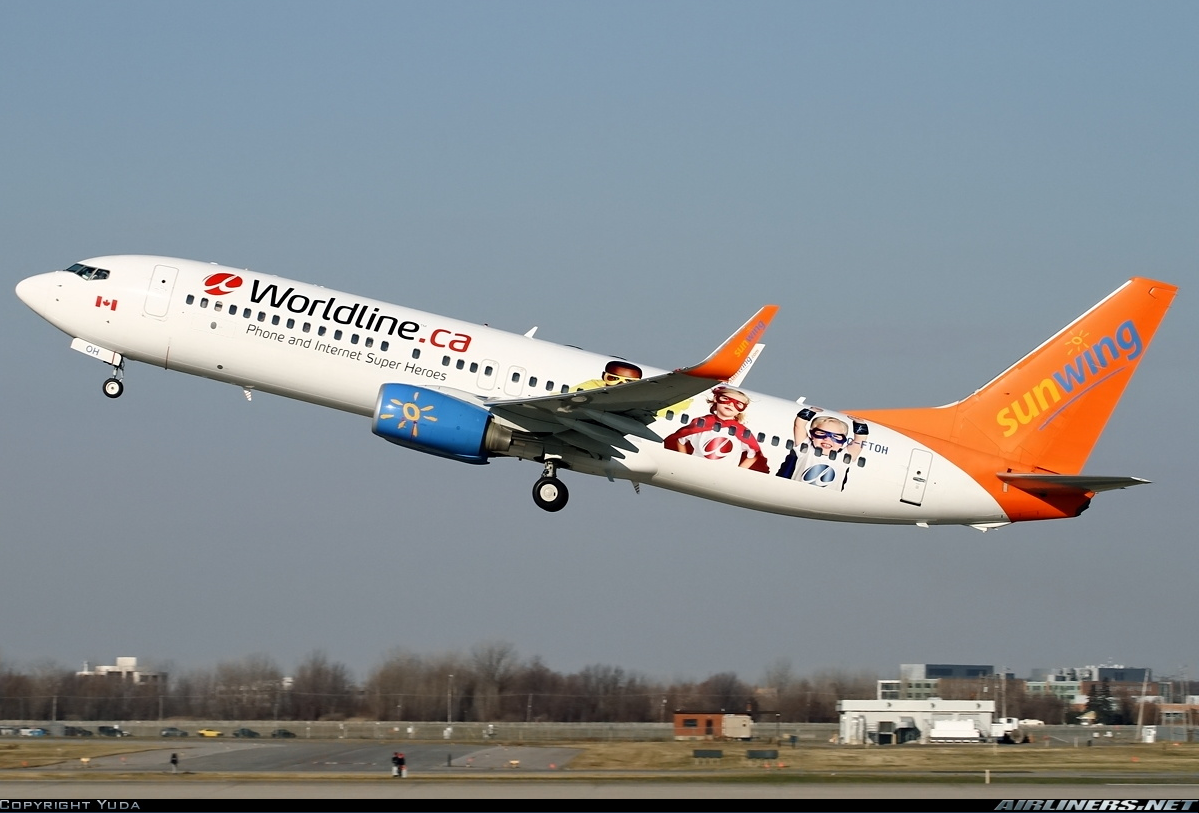
Press Release: Look! Up in the Sky! It’s a Bird…It’s a Plane … no, it’s Worldline’s Superhero Kids!

Look! Up in the Sky! It’s a Bird…It’s a Plane … no, it’s Worldline’s Superhero Kids!

Waterloo Region’s largest Phone and Internet company takes off nationally!

Superhero Kids plane

CAMBRIDGE, ONTARIO–(12/03/13)- Worldline, Canada’s fastest growing  Home Phone, Unlimited Internet and Long Distance company, announced today the inaugural flight of their new Sunwing Vacations plane sporting the Worldline Superhero Kids.

Celebrating its tenth anniversary in 2013, Worldline is the Waterloo Region’s largest telecommunications company with a national footprint providing hundreds of thousands of Canadians high quality and cost effective services.

To commemorate the first flight, and the introduction of their Unlimited High Speed Cable Internet, Worldline has launched the “You Pick Your Trip” contest , where two lucky Canadians can win their dream vacation to any one of  Sunwing’s destinations.

Worldline Co-Founder and CMO John Stix said, “We started up Worldline in a basement office in Kitchener just ten years ago, and we’ve been growing ever since with over 200 employees worldwide, but this year we’ve taken it to a whole new level with our Superhero Kids, and don’t they look great up there!”

“We’re also holding this contest to celebrate Worldline’s Unlimited High Speed Cable Internet and Bundle packages, which is yet another tool in our ongoing disruptive campaign to stop Canadians from being overcharged for their telecom services.”

To enter the contest visit Worldline’s Facebook Page, fill out the form to see if you qualify for Worldline’s Unlimited High Speed Cable Internet, to be automatically entered (no purchase necessary). The contest runs until December 31st, when Worldline will announce the lucky winner, giving someone in the country a Very Happy New Year!

About Worldline:
Celebrating its 10th anniversary in 2013, Worldline provides affordable home phone, unlimited high speed Internet and long distance services to hard working Canadians. One of the fastest growing telecommunications companies in Canada, Worldline is wholly owned and operated by Fibernetics Corp, a Competitive Local Exchange Carrier (CLEC) servicing over 300,000 Canadians coast-to-coast with Worldline, and NEWT, its business services division.  Website: worldline.ca Twitter: @worldlinecanada

About Sunwing Vacations:
Sunwing Vacations has become the leading, integrated leisure tour operator in Canada since it began operation in 2002. A family-managed and operated business, Sunwing is one of Canada’s fastest growing and most successful companies. Sunwing Airlines, Canada’s premier leisure airline consistently voted the #1 leisure airline by Canadian Travel Agents, is a full service airline providing “high frills” leisure class service at a low cost.  Website: Sunwing.ca

###

Media Inquires:
John Stix – CMO
Worldline
519-489-6700
jstix@corp.fibernetics.ca