They tried, but failed. Canadians speed up “cutting the cable”

Cutting the CableEarlier this year, in what was certainly a shocker to the TV programming supplying folks, a report came out saying that in 2012 a full 8 percent of Canadians dropped their TV service and instead relied entirely on broadband Internet to get their video fun.

Today those TV people must be looking for the defib paddles.

In a new survey commissioned by Google, it turns out that 8 percent number was a wee bit low. Try twice that, as in 16 percent!

That’s despite the aggressive tactics The Big Three rolled out over the past year by instituting low bandwidth caps on their loyal unsuspecting customers to try to stop them from watching Netflix and Youtube.

According to the recent comScore survey, an additional 35 percent watch both traditional TV and online video  and an additional 35 percent only watch traditional TV, reports the Canadian Press.

Canadians watched 2.9 billion YouTube videos a month, which equals an average of 127 videos per user and five videos per visit.

Some of the biggest Canadian ISPs restrict their users to as little as 20 GB per month on some plans, with overages of up to $4 per additional GB, which has forced companies like Netflix to lower their default video quality for Canadian viewers.

Critics have long argued that ISPs use these pricing schemes to restrict online competition and keep viewers glued to their own TV offerings. comScore’s numbers seem to suggest that these efforts have clearly failed.

wl_save_internetAll of The Big Three have subsequently come out with Unlimited High Speed Internet plans to battle the bad press, (although all of their plans are just about double what we at Worldline charge), but the harm was already done.

Canadians have begun to realize they simply don’t have to take it any more.

Good for them.

(and good for us)
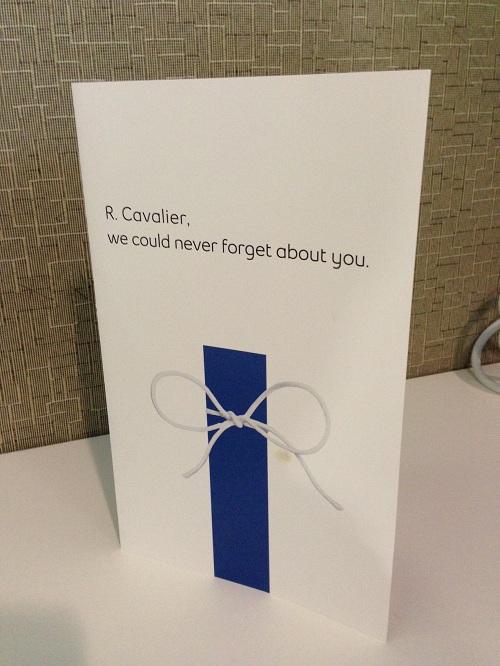
Loyalty isn’t a “Program”

Bell Card

As you would imagine, the folks who work at Worldline use Worldline as their Home Phone and Unlimited High Speed Internet provider – meaning they were once with someone else.

Like Bell for instance. Our employees bring in these “loyalty” cards all the time for us to giggle over, but for our business, it’s not a joke.

Once someone leaves a company like Bell, that company works very, very hard at getting that person back by being all touchy-feely with a series of personalized cards offering them super discounts to come back.

You know, because they care and stuff.

The problem with this is, if they were this awesome while they were providing their service, chances are no one would ever leave them in the first place.

Regardless, these semi-shameless marketing efforts are effective, but not nearly as effective as what they do when someone calls in to cancel on them.

When we sign up customers to a Worldline service, we know a certain percentage will in fact not become our customers because of what happens when they are on the phone with the likes of Bell, Telus or Rogers to cancel.

In the parlance of the telecom industry, this is called “breakage.”

The big three are great at it. We’ve heard customers tell us tales of being wooed with promises of discounts (that only last a few months) or price matching us (again, for only a few months) or if they are truly desperate, actually going lower than us (which will last even fewer months). Then if that doesn’t work – then comes out the major artillery; they switch them over to a “supervisor.”

These are the folks who are specialists at making the switch as painful as possible. They’re so good they even make switching from their overpriced, bandwidth-capped service seem somehow illogical.

And, unfortunately for us, on occasion these tactics work. We lose customers who were looking forward to saving up to $600/yr on their bills simply because they were talked out of it.

Now Rogers is going one step further. They’re trying to entice their existing customer base   into staying by signing them up to their new “loyalty” program. Starting this summer, “points” can be earned for Rogers services, and applied to other services like discounts on roaming charges, or a free PPV movie, stuff like that.

Worldline BundleIt adds up to a few pennies a month in benefits, weighed against the hundreds a year they are overcharging their customers.

It’s a great deal – for them.

And it’s also a preemptive strike to keep customers from thinking about going elsewhere, because now when someone calls into switch Rogers can say, “But what about all your points?”

Tricky eh?

So, how will Worldline fight against this? Same way we always have – by providing the fairest priced, Unlimited High Speed Internet and Home Phone in Canada – and trusting our customers to understand that we are taking on the big telecom companies on their behalf.

Joyce Maynard once wrote, “a person who deserves my loyalty receives it.”

The same applies to companies who provide a service.

Canadians have no idea they have Telco options: “I had no idea I could switch!”

BigThreeWe hear it all the time.

The Big Three have done such an awesome job at dominating the Canadian Telecommunications marketplace with their carpet bombing of cross-platform promotion and advertising that most Canadian believe they have little or, in most cases, no choice but to bite the bullet and sign up for with one of these overpriced behemoths.

On Canada Day we helped promote the fireworks display at Riverside Park in Cambridge, (our home town), with a massive TV truck, (literally a truck with a MASSIVE TV on the back), that also ran a Worldline promo.

A woman who was attending the show with her family saw the promo and called and signed up immediately telling the sales agent, “I had no idea I could switch!”, and that she’s been “dying to dump Rogers for ages” but didn’t know she had options.

Worldline BundleTo be honest, it drives us a little nuts. Here’s this nice lady in a park that is about 2 kms from Worldline’s head-office and she didn’t even know we exist!

It just shows you how daunting the task is that we face in this uneven market. In our own home town the Big Three have such a presence that they can essentially drown out a company like Worldline that has over 300,000 customers.

That said, we’re up to the task because we know Canadians who no longer can tolerate being overcharged for their High Speed Internet or Home Phone will find us, or we’ll find them.

We kind of feel it’s our duty.

Worldline’s VP of Product Development, Mike Brown – The Unsung MVP

rtioe

Jody, John and Mike Brown AKA Nice Guy

Three friends named Jody Schnarr, John Stix and Mike Brown got together ten years ago and set out to change the Canadian telecommunication industry by starting up their own phone company that is now known as Worldline.

Today more than 300,000 Canadians utilize the services they provide in their homes and their businesses, enjoying the benefits of a high quality service, but at an affordable price.

Jody, as the CEO and technical lead gets a lot of attention, as does John Stix as the CMO and public face of the company. Mike Brown on the other hand has been working in the trenches of the company doing the jobs no else wanted to do since day one. He was the guy who drove across the country installing the first switches for the network, or the voice on the end of the phone when those first customers would call in with an issue with their service.

It’s the little things that matter to Mike like going out of his way to make sure customers are getting the services they are paying for, which apparently includes dropping by their houses and setting up their Internet, home network, Netflix and laptop access.

Like he did on Wednesday night.

From: doug xxxxxxxxxx
Sent: June-19-13 9:19 PM
To: Michael Brown
Cc: jody_schnarr@worldline.ca
Subject: Brilliant Customer Service

 HI Mike

Thank you for your amazing customer service

The service has not dropped once since you replaced the modem..

Just the fact that a VP of Worldline.ca came to our home to help us, proves that you care about your customers..

Our customer loyalty is now with you & we will now be referring Worldline.ca to all our friends & family..

As a suggestion it would be cool if you had a marble mouse with a big Worldine.ca marble in it…

Warm regards Doug & Debbie
Thanks again & best wishes for your future endeavours
Hope to see you in the top 100 Canadian companies soon

Unbenounced to all of us, this is something Mike does all the time. He receives copies of all customer service emails, and if someone is close by and he has the time, he’ll take matters into his own hands on his own time.

Most likely every successful company has their own Mike Brown, the go-to-guy who just wants to get stuff done, but Worldline is very lucky to have our own.

Mike Brown – Nice Guy

Time for Ottawa to Get Into the Canadian Telecommunications Game!

Here are some excerpts from a must-read piece from Andrew Coyne called:

Canada’s telecom industry in need of real competition

Andrew CoyneNo sooner had the Conservative government issued its decision blocking Telus from taking over Mobilicity than the Conservative party was raising funds off it. “Our Conservative government is taking action to reduce your cellphone bill,” ran the pitch, in emails that went out to party supporters that same day. “We will not allow the big telecommunications companies to shut down competition.”

That’s nice. But the competition the government wants to protect is not competition as you or I understand it, where all the players are free to buy and sell in open markets and may the best firm win. Rather, it’s a carefully circumscribed, artificially sustained affair, a kind of hothouse competition in which the weaker firms are kept in the game by government action, a simulacrum designed to preserve the illusion of competition in place of the real thing. That may be good for the industry, but it’s not clear it’s good for consumers…

…wireless is not the only part of the telecom sector where this sort of highly directed competition is the rule. Across the television and Internet universe, also dominated by Rogers, Bell and Telus, along with Shaw Cable in the West and a handful of other players, the CRTC is engaged in the same kind of complex jiggery-pokery. As with wireless, this is sometimes subject to cabinet override, adding a second layer of unpredictability.

The issue here is that the major carriers, the people who own the “pipes,” are also involved in producing the content that travels along them – in competition, as it were, with their customers, the television networks and smaller Internet service providers that pay to use them. The carriers’ obvious conflict of interest in this regard is a constant source of controversy.

The flare-up over usage-based billing, for example, was in part based on the suspicion that the caps were aimed at limiting the retail ISPs’ share of the market. So, too, the recent CRTC hearings on “mandatory carriage” heard accusations that the carriers were favouring their own offerings over those of the applicants. The industry is consumed with this, an endless game of point-the-finger, again aimed at persuading the regulators, rather than consumers.

We’ve tried the government’s way. It hasn’t worked. Protecting consumers from the ill effects of fake competition may give the Conservatives an issue to raise funds with. But personally, I’d rather have real competition.

wl_save_internetNow. predictably, here’s where Andrew ran off the rails, suggesting the solution is to allow International (i.e. American) carriers into Canada to make the Big Three play nice.

We here at Worldline would suggest they simply allowing for an even playing field for all Canadian companies might be the better route.

Regardless, there is a huge problem in this country as Canadians are being charged more than basically everyone in the developed world for High Speed Unlimited Internet, and other telecom services.

As Andrew noted, the folks in Ottawa have done some stuff, but clearly not enough.